



For students preparing for technical careers, there can be a significant difference between learning how something works in a classroom and applying that knowledge to equipment being used every day. Carolina Handling’s new Tech Scholar Program is designed to help bridge that gap.
Launched in partnership with Tri-County Technical College, the program gives students pursuing technical careers an opportunity to continue their education while gaining paid, hands-on experience alongside Carolina Handling technicians. The first cohort includes two Tri-County students, Matthew Howard and Marshall Altman, who are gaining experience in two different technical environments at Carolina Handling.
The program also represents something bigger for Carolina Handling: an opportunity to introduce students to careers in material handling and intralogistics while developing a pipeline of future technical talent that the company hopes to expand through partnerships with schools across its five-state footprint.
What is the Carolina Handling Tech Scholar Program?
The Tech Scholar Program combines students’ technical education with paid workplace experience.
“The Tech Scholar Program creates a pathway for students at technical and community colleges to apply the knowledge and skills they’re learning in the classroom in a real-world environment,” said Dan Baker, Senior Recruiting Manager at Carolina Handling. “Our goal is to support their professional growth and development while they continue their education.”
Carolina Handling is beginning the program with Tri-County Technical College, building on an existing relationship between the organizations. According to Baker, that relationship and a shared focus on student development made Tri-County a natural partner for the first cohort. For Tri-County, the partnership provides students with an opportunity not simply to learn about a potential career, but to experience one before graduation.
“Industry experience takes what students learn in lectures, course materials and labs and makes it real,” said Paul Phelps, dean of Tri-County Technical College’s Engineering and Industrial Technology Division. “They see how those concepts apply to actual work, not just to a lab activity completed for a grade. Repeatedly applying what they have learned helps students deepen their understanding, build confidence and move toward mastery of the skills they need to become capable technicians.”
Phelps said Carolina Handling’s presence in the region, plans for growth and work in automation and logistics support contributed to Tri-County’s interest in the partnership. He also pointed to the opportunity for students to begin as technicians, continue developing their skills and potentially pursue other opportunities as the company grows.
“Carolina Handling has demonstrated its commitment through action, not just promises,” Phelps said. “That makes it a strong partner in creating meaningful opportunities for our students through the Tech Scholar Program.”
How Does the Tech Scholar Program Work?
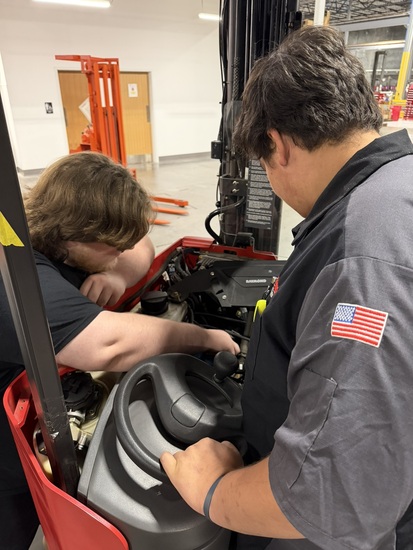
Despite those different environments, Scott Holcombe, Technical Training Manager at Carolina Handling, said both students are being put through the same training and development that a service technician would go through at Carolina Handling.
“We’re structuring it over a longer period so they can work at a pace that fits their experience level and their school schedules," Holcombe said.
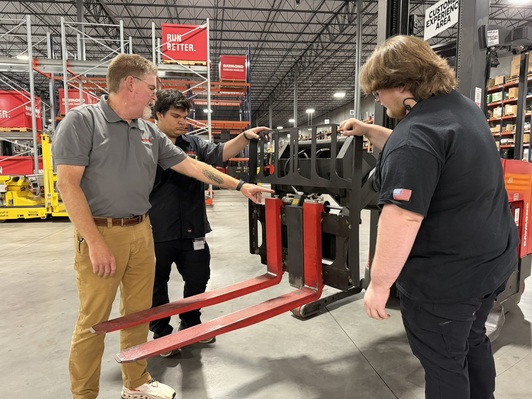
Technical Training Manager Scott Holcombe works with Carolina Handling's Tech Scholar students in the warehouse at the company's Intralogistics Solutions Center in Easley, SC
The students are paid while working and while participating in Carolina Handling training, giving them a combination of experience, exposure and income as they continue their education. Holcombe said the flexibility is important because the students are at different points in their academic programs.
What Do Tech Scholars Learn on the Job?
For both Tech Scholars, one benefit stands out: putting their hands on equipment.
Matthew Howard said he could understand theories and read schematics in the classroom, but wanted more opportunities to physically apply those skills. Working in Carolina Handling’s shop is giving him that opportunity. Howard cited experiences such as becoming comfortable using tools and learning the proper use of personal protective equipment as examples of knowledge he has gained on the job.
Marshall Altman said working at a customer site has allowed him to learn scheduled maintenance and watch experienced technicians perform diagnostics and respond to equipment issues.
“You’re learning to actually work on something rather than learning on a trainer,” Altman said. “You’re working on stuff that is actually getting used.”
For Jordan Holmes, Technical Recruiter at Carolina Handling, that is what makes the combination of classroom education and workplace experience particularly valuable.
“The real-world application is something that’s very difficult to replicate in a classroom,” Holmes said. “Being in the field or in the shop with technicians gives students someone who can walk them through the why behind what they’re doing, as well as show them how to diagnose a problem and get equipment back up and moving.”
How Does the Tech Scholar Program Develop Technical Skills?
Dan Baker sees problem-solving and resourcefulness as two important skills the students can develop by working alongside experienced professionals.
“Things are going to happen in your career that you can’t necessarily find the answer to in a textbook,” Baker said. “This gives them the opportunity to work alongside professionals who can show them the ropes, show them how to find answers when they’re not right in front of you and help them develop the skills to solve problems on their own.”
“Partnerships like this help students build confidence and make more informed decisions about their careers,” Paul Phelps said. “They can explore a field firsthand, develop professional habits and better understand what employers expect before they graduate.”
That ability to explore a career while still in school is an important part of the Tech Scholar model. Holcombe said traditional career paths can mean completing school before discovering how, or whether, classroom learning translates into a particular career. The Tech Scholar Program creates that connection sooner.
“It gives them a chance to take what they’re gaining through classroom instruction and put it into play in the real world,” Holcombe said. “They get an early feel for, ‘Is this what I want to be doing? Do I enjoy it?’ And it gives Carolina Handling the ability to find talent early and expose people to material handling and intralogistics as a career path.”
What Do the Tech Scholars Think of the Program?
For Marshall Altman, interest in Carolina Handling began before he became a Tech Scholar. He toured the Intralogistics Solutions Center with other Tri-County students in spring 2026 and said conversations with the people doing the work made an impression.
“Being able to talk to team leaders was where I really got interested because I love to talk to people who are actually doing the work,” Altman said.
Now, working alongside experienced technicians is giving him a firsthand look at the career.
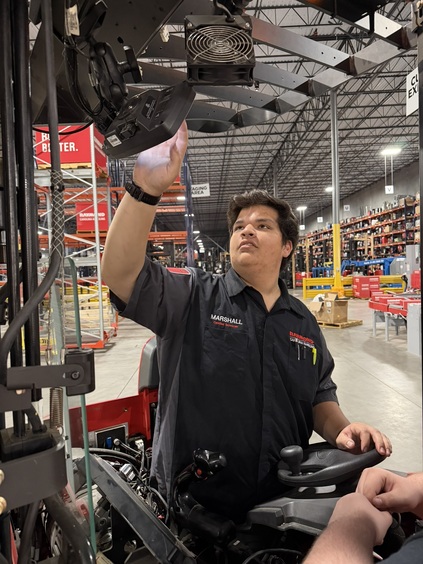
Carolina Handling Tech Scholar Marshall Altman
“Watching them do scheduled maintenance, diagnostics, breakdowns and stuff like that, it’s so helpful to see," Altman said.
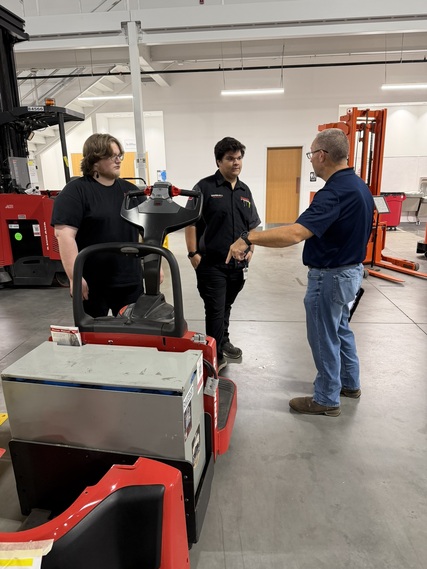
Technical Trainer Charlie Reeves works with the Tech Scholar students at Carolina Handling's Intralogistics Solutions Center in Easley, SC
Both Altman and Howard hope that their experience as Tech Scholars leads to a full-time opportunity with Carolina Handling after graduation. Howard shares this message for other students considering the program: “Definitely try. It’s a great place to work. They really care about your safety. It’s all good people here, I enjoy it," Howard said.
Why is Carolina Handling Investing in the Tech Scholar Program?
For Carolina Handling, the program is both an investment in students and a way to develop relationships with potential future associates before they enter the workforce. Baker said Carolina Handling deliberately started with a small first cohort so the company could learn from the experience, identify opportunities to improve the program, and establish a model that could eventually be expanded. The long-term goal is not simply to recruit students into their first job. It is also to help them see what a technical career can become.
“We’re able to talk through not just a service technician being a job, but what that looks like long-term from a career pathway standpoint,” Baker said. “It’s an opportunity for us to show students what a career path looks like with an organization and how we’re going to support them in their growth and development.”
The program is designed to last approximately six to 12 months, with completing their education remaining the students’ first priority. Ideally, Baker said, the Tech Scholars will eventually find full-time opportunities at Carolina Handling, but the experience is intended to prepare them for their careers regardless of where they ultimately work.
Will Carolina Handling's Tech Scholar Program Expand?
Carolina Handling hopes to take what it learns from its partnership with Tri-County Technical College and develop a model that can be expanded to other schools across the company’s five-state footprint.
Holcombe said stronger connections between employers and technical schools could eventually go even further by helping the two sides better understand the skills students need for careers in intralogistics.
“The big picture gives us the opportunity, as we get more integrated with schools, to help on the curriculum development side,” Holcombe said. “It’s almost tailoring career paths into intralogistics that don’t exist today.”
“A strong industry partnership benefits more than one student or one employer,” Paul Phelps said. “It gives the College valuable insight into changing workforce needs, gives employers an opportunity to help develop future talent, and gives students a clearer path from learning to a career. That is the kind of opportunity we want to create through the Tech Scholar Program.”
Students interested in technical career opportunities, as well as colleges interested in learning more about potentially partnering with Carolina Handling, can contact the Recruiting team at Recruiting@carolinahandling.com.
Students can also visit the Carolina Handling careers page to explore opportunities.