

Show Notes
Joe Perkins (COO) and Brent Hillabrand (President and CEO) are joined by Ryan Tiller, VP of Distribution & Fleet Services, and Will Jones, President/CEO of Thompson Children & Family Focus and author, to unpack what servant leadership actually looks like.
From the “flight attendant flying the jet” analogy to daily huddles, floor check-ins, turnover, trust, and the hidden cost of command-and-control leadership, this episode breaks down why leadership is the variable every operation feels but few actually measure. Joe, Brent, Ryan, and Will discuss how strong leaders build trust before tough conversations, stop rescuing people by doing their work for them, and create teams that perform because people feel supported, empowered, and held to a clear standard.
What you’ll learn:
• Why great operators do not automatically make great leaders
• How servant leadership impacts trust, morale, retention, and performance
• Why leaders should stop doing the work for the people they lead
• How to build real check-ins during the first hour of a shift
• Why protecting the standard starts with catching people doing things right
• Turning your best operator into an unsupported leader can be risky!
• Learn how to develop leadership that builds trust, improves performance, and helps teams handle pressure without falling into constant firefighting.
Key Moments:
00:00 — The Leadership Variable Nobody Measures
01:00 — Why Great Operators Often Struggle as Leaders
04:00 — The Biggest Promotion Mistake Companies Make
05:50 — Servant Leadership vs. “Tough Manager” Culture
10:00 — What Servant Leadership Looks Like on Day One
15:00 — The Simple Habit That Builds Trust Fast
16:30 — How Leadership Impacts Turnover, Morale & Results
21:00 — Daily Habits of Effective Servant Leaders
28:45 — Leadership Lessons We Had to Unlearn
34:15 — Leadership Rapid Fire: Hiring, Culture & Communication
Transcript
There is one variable present in every operation that rarely appears on a dashboard.
It does not show up on a productivity report. It is not tracked in inventory counts, throughput metrics, or labor utilization. Yet it influences every one of those outcomes.
It is leadership.
Whether an operation is running smoothly or constantly fighting fires, leadership is often the difference. Associates feel it. Customers notice it. Teams respond to it. And while it can be difficult to quantify, its impact is impossible to ignore.
The challenge is that leadership is often misunderstood. Many organizations assume leadership naturally follows performance. They promote their best operators, reward technical expertise, and expect results to continue. Unfortunately, leadership requires an entirely different skill set.
The organizations that understand this distinction create stronger cultures, better retention, and more sustainable growth.
Why Great Operators Don't Always Become Great Leaders
One of the most common assumptions in business is that great operators automatically become great leaders.
It seems logical. High performers know the work, consistently produce results, and often earn the respect of their peers.
But leadership requires something different.
Being exceptional at executing a process does not necessarily mean someone is prepared to coach people, navigate difficult conversations, develop talent, or create alignment across a team.
In fact, promoting a high-performing associate into leadership without proper preparation can create two problems.
First, the organization loses a great operator.
Second, the individual may struggle in a role they were never equipped to perform or even interested in.
Many organizations unintentionally create this situation because leadership becomes the reward for performance. A title, increased compensation, and additional responsibility are often viewed as the next logical step.
But leadership should not be viewed as a reward.
It should be viewed as a responsibility.
The skills that make someone successful as an individual contributor are often very different from the skills required to lead others successfully.
Most Problems Are Process Problems, Not People Problems
When performance issues emerge, many leaders immediately focus on the individual:
Who's not performing?
Who's making mistakes?
Who's causing the issue?
But in many cases, the problem isn't the person.
It's the process.
Poor communication, unclear expectations, inconsistent accountability, inadequate training, and broken systems often create the very behaviors leaders are trying to correct.
When leaders focus exclusively on people without examining the systems around them, they treat symptoms rather than addressing root causes.
Strong leaders understand that sustainable performance comes from building repeatable processes that support people.
When the process improves, performance often improves with it.
This shift in perspective changes how leaders approach problem-solving. Instead of asking, "Who caused this?" they begin asking, "What allowed this to happen?"
That single question often uncovers opportunities for meaningful improvement.
The Servant Leadership Myth
Few leadership concepts are more misunderstood than servant leadership.
Many leaders believe servant leadership means doing the work for the people they lead.
They jump in to solve every problem.
They provide every answer.
They rescue associates before challenges become learning opportunities.
While these actions are often rooted in good intentions, they can create dependency instead of development.
When leaders consistently do the work for others, they unintentionally prevent growth.
People never learn to think critically.
They never build confidence.
They never develop the problem-solving skills necessary to lead in the future.
Servant leadership is not about removing responsibility.
It is about removing obstacles.
The goal is not to become the solution to every problem. The goal is to equip people with the tools, resources, and support they need to solve the problems themselves.
Great leaders understand that development requires ownership.
If leaders constantly step in to save the day, they may achieve short-term results, but they limit long-term growth.
Tough Conversations Build Trust
Another common misconception is that servant leadership means avoiding accountability.
In reality, the opposite is true.
Strong servant leaders regularly have difficult conversations.
The difference is that those conversations are built on trust.
When leaders invest time in understanding their people, showing genuine care, and building relationships, accountability becomes easier, not harder.
People are more receptive to feedback when they believe it comes from someone who wants them to succeed.
Trust changes the entire dynamic.
Instead of feeling attacked, associates feel supported.
Instead of viewing feedback as punishment, they view it as development.
The strongest leaders are not those who avoid difficult conversations, they are the leaders who care enough to have them.
Leadership Is Built Through Daily Rhythms
Leadership is rarely defined by a single moment.
It is built through consistent habits and interactions repeated over time.
The most effective leaders create intentional rhythms that keep communication flowing and relationships strong.
These rhythms might include:
• Daily huddles
• Weekly tactical meetings
• One-on-one coaching sessions
• Leadership by walking around
• Informal floor conversations
Many organizations have implemented daily huddles as a way to improve communication and alignment.
Simple questions can create meaningful conversations:
• What was your biggest win yesterday?
• Where are you stuck?
• What support do you need today?
These interactions may only take a few minutes, but they provide leaders with valuable insight into what is happening inside the operation.
More importantly, they create opportunities for connection.
Leadership is often less about delivering information and more about creating conversations.
Leaders Find What They Look For
Many leaders have been conditioned to look for problems.
They walk into an operation searching for mistakes, inefficiencies, or areas that need correction.
While identifying issues is important, great leaders intentionally balance that approach by looking for what is going right.
When leaders consistently recognize positive behaviors, those behaviors become reinforced.
People naturally repeat what receives attention.
A simple acknowledgment can have a significant impact:
"I noticed how you handled that situation."
"Thank you for helping your teammate."
"Your area looks great today."
Recognition is not about lowering standards, it is about reinforcing standards.
The best leaders understand that people need to know what success looks like just as much as they need to know when improvement is necessary.
The Business Cost of Poor Leadership
Leadership is often discussed as a people issue.
In reality, it is a business issue.
Poor leadership affects:
• Turnover
• Engagement
• Productivity
• Safety
• Customer experience
• Operational consistency
One of the most significant costs is retention.
People often say associates leave companies. More often, they leave leaders.
When employees feel unsupported, disconnected, or undervalued, engagement begins to decline.
When engagement declines, turnover increases.
And turnover creates additional challenges:
• Loss of tribal knowledge
• Increased training costs
• Reduced productivity
• Lower morale
• Greater strain on remaining team members
However, when associates feel supported, empowered, and challenged appropriately, they are more likely to stay, contribute, and grow.
Leadership directly influences the environment people choose to remain in.
The Mirror Most Leaders Avoid
Perhaps the most powerful lesson in leadership has very little to do with leading others and has everything to do with leading yourself.
Many leaders spend years focused on improving everyone around them.
They focus on fixing associates, improving teams, and changing behaviors.
Eventually, many realize something important: The fastest way to improve a team is often to improve the leader.
When leaders become healthier, more disciplined, more self-aware, and more intentional, those changes naturally influence the people around them.
Self-leadership often starts with reflection.
It requires leaders to ask difficult questions:
• What am I contributing to this problem?
• Where do I need to improve?
• How am I showing up each day?
Leadership growth begins when leaders stop focusing exclusively on others and begin examining themselves.
Why Good Leadership Feels Unnatural
One reason leadership can be so challenging is because many of its most important behaviors feel unnatural.
Good leaders often:
• Allow people to fail
• Resist taking over
• Ask questions instead of giving answers
• Slow down to develop people
• Prioritize long-term growth over short-term efficiency
In many situations, leaders could complete the task faster themselves.
They could solve the problem immediately.
They could provide the answer.
But development requires patience.
People grow through experience, not through observation alone.
That means leaders must sometimes allow mistakes, struggles, and learning opportunities to occur.
Development is rarely efficient, but it is essential.
Leadership Development Cannot Be Microwaved
Organizations often want faster leadership development.
The challenge is that leadership does not develop overnight.
There are no shortcuts.
Leadership growth requires:
• Repetition
• Experience
• Reflection
• Coaching
• Accountability
• Time
Future leaders need opportunities to make decisions, solve problems, navigate setbacks, and learn from mistakes.
They need support and guidance, but they also need room to grow.
Strong organizations understand that leadership development is not an event, it is a process, and like most worthwhile investments, the results compound over time.
Final Takeaway
Leadership influences every aspect of an organization.
It shapes culture, drives performance, impacts retention, builds trust, and determines how effectively teams respond to challenges.
Yet the most effective leaders understand that leadership is not about having all the answers.
It is not about titles.
It is not about being the smartest person in the room.
Leadership is about creating an environment where others can succeed.
The best leaders do not build followers, they build people.
And while leadership may be difficult to measure, it remains one of the most important variables every organization feels.
Hosts:

Brent Hillabrand
CEO & President
Carolina Handling
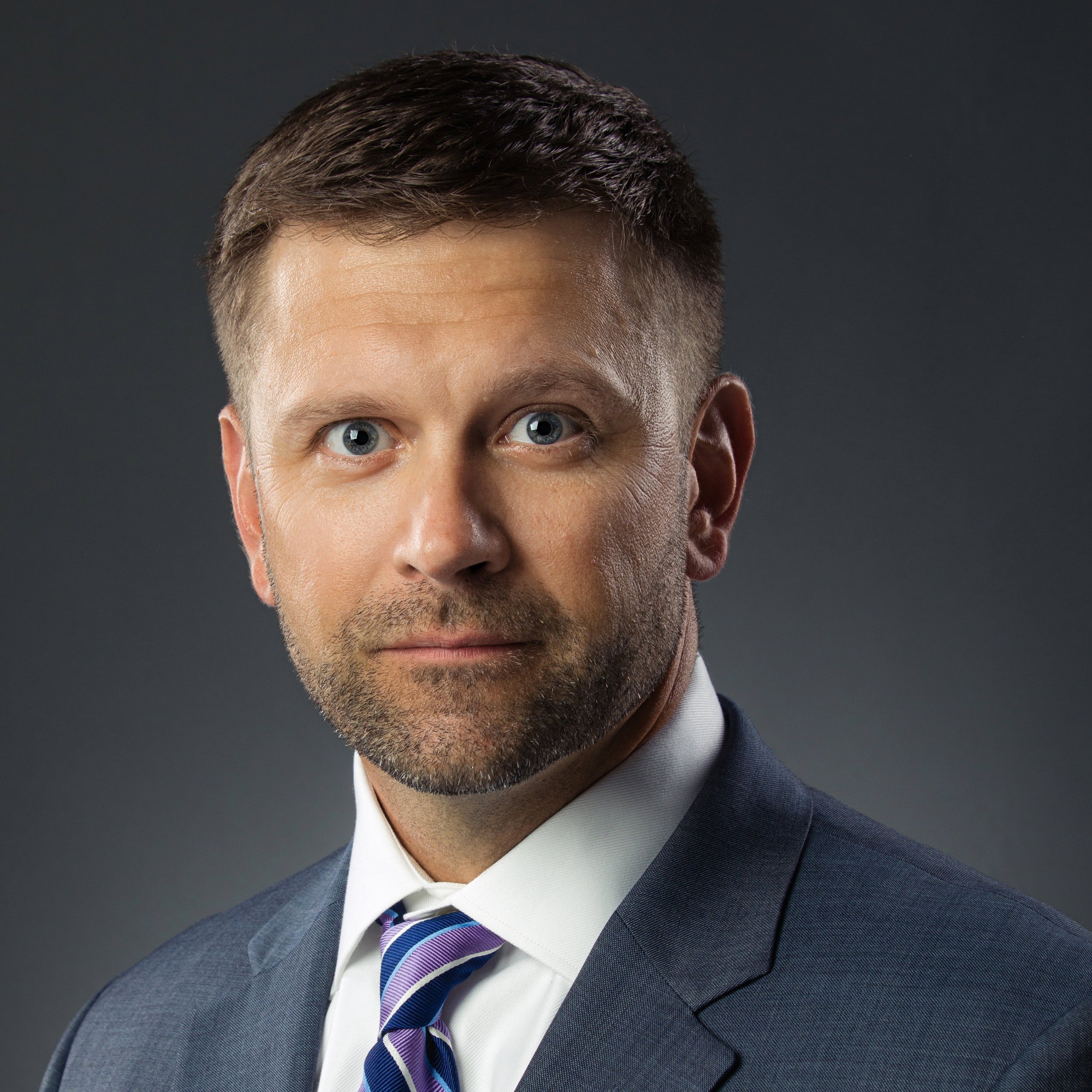
Joe Perkins
Chief Operating Officer
Carolina Handling
Guests:

Will Jones
President and CEO, Author
Thompson Children & Family Focus

Ryan Tiller
VP of Distribution & Fleet Services
Carolina Handling

