



When businesses rent forklifts, they often focus on getting the equipment they need, when they need it. But the condition of that equipment and the support behind it can have just as much impact on operational performance as the rental itself.
A forklift rental can help address a temporary increase in demand, supplement an existing fleet, or keep operations moving during repairs. However, without a proactive maintenance strategy, rental equipment can become another source of unexpected downtime.
According to David Horak, Vice President of Operations at Carolina Handling, preventive maintenance is one of the most effective ways to protect productivity, improve safety, and reduce disruptions.
Why Is Preventive Maintenance Important for Forklift Rentals?
When forklifts stop moving, materials stop moving.
Horak said the biggest risk of neglecting maintenance goes far beyond a single piece of equipment.
"The biggest risk isn't necessarily only the broken forklift. There's a chain reaction that follows that broken forklift," Horak said.
Unexpected equipment failures can create production delays, force associates to work around unavailable equipment, increase overtime, and impact customer deliveries. Neglecting inspections can also create safety risks and shorten equipment life.
.webp?width=518&height=410&name=New%20Photo%202(1).webp)
"Regular maintenance is one of the low-cost investments that a customer can make to avoid significant losses later,” Horak said.
Whether equipment is owned or rented, maintenance remains critical to keeping operations running safely and efficiently.
Who Is Responsible for Preventive Maintenance on a Rental Forklift?
Responsibility varies by provider, making it an important question to ask before entering a rental agreement.
When Carolina Handling provides the rental equipment, preventive maintenance is included.
“At Carolina Handling, all preventive maintenance is covered by us and included in the rental rate,” Horak said.
Horak said that approach helps businesses focus on their operations while ensuring equipment receives the maintenance necessary to support reliability and uptime.
What Does Preventive Maintenance on Forklifts Help to Prevent?
Preventive maintenance (sometimes called preventative maintenance) is designed to identify and address issues before they become larger problems.
"Preventive maintenance is really about creating predictable operations. Rather than reacting to failures, scheduled maintenance allows equipment to be serviced before problems affect production," Horak said.
Well-maintained forklifts spend more time moving product and less time out of service waiting for repairs. That consistency improves both productivity and operator confidence.
"When uptime improves, then productivity naturally follows.,” Horak said.
What Does Forklift Downtime Cost a Business?
The cost of downtime is often much greater than the cost of a repair.
 "A single hour of downtime can cost hundreds to thousands of dollars in lost productivity. It can also create significant ripple effects, including lower customer satisfaction."
David Horak, Vice President of Operations, Carolina Handling
Production delays, missed deliveries, overtime costs, workflow disruptions, and customer service challenges can all stem from equipment failures. And, the consequences may extend throughout the operation.
"The biggest risk isn't necessarily only the broken forklift. There's a chain reaction that follows that broken forklift,” Horak said.
For many organizations, preventive maintenance is not simply an equipment strategy. It's a business continuity strategy.
What Should Businesses Look for in a Forklift Rental Provider?
Not all rental providers offer the same level of service, equipment availability, or maintenance support.
Horak said fleet availability should be one of the first considerations.
"For a rental specifically, it’s very important to look into fleet availability. For example, what types of equipment do they have available? How quickly can they dispatch and deliver those types of things in order to be able to supplement a repair issue or an influx in productivity requirements issue?” Horak said.
Businesses should also evaluate:
- Technician availability
- Parts availability
- Service response times
- Equipment quality
- Ability to support operational needs beyond equipment delivery
"You want to partner with a service provider who has a very dense population of technicians in and around your operation," Horak said. "Someone who's literally in your backyard and understands your operation close to the same level that you do."
How Can Businesses Prevent Downtime and Keep Operations Running?
Preventing downtime requires more than reacting when something breaks.
Horak said that a preventive maintenance plan, daily inspections, and data review keep equipment running and help avoid disruptions.
Daily operator inspections can help identify small issues before they become larger problems. Horak emphasized that businesses should have operator checklists in place before associates begin their shifts to ensure equipment is operating properly and warning signs aren't overlooked.
Data also plays an important role. Companies that regularly review equipment utilization, maintenance trends, and fleet performance better position themselves to identify risks before they create operational disruptions.
How Can Rental Equipment Support Business Continuity?
Even the best-maintained fleets can experience unexpected issues.
"Even with excellent maintenance procedures, there are still going to be unexpected things that can happen," Horak said.
When breakdowns occur, rental equipment can help organizations maintain productivity while repairs are completed.
Rentals can also help businesses:
- Supplement existing fleets
- Support short-term operational demands
- Replace equipment that is temporarily out of service
- Maintain throughput during unexpected equipment failures
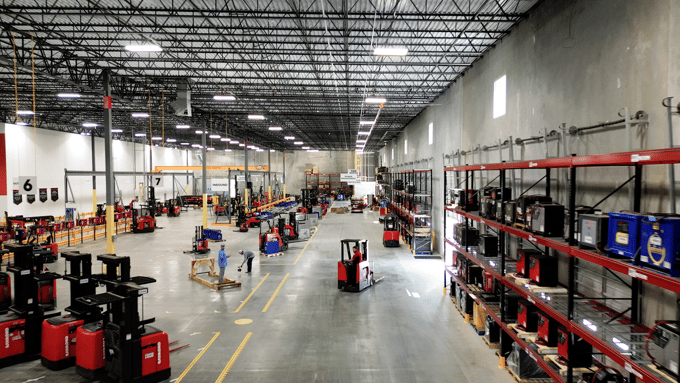
The key is choosing a rental partner with equipment availability, local service support, and responsive technicians.
Unexpected breakdowns aren't the only reason to consider rentals.
"Outside of emergency repair situations, there are a lot of other reasons to investigate rental opportunities in your operation," Horak said. "Customer or seasonal demand, project work, and even as a way to temporarily evaluate or test a fleet change can be other good opportunities to consider rental equipment."
Rentals provide flexibility and can help businesses respond to changing requirements without making a long-term equipment investment.
What Makes a Well-Maintained Rental Fleet Different?
The age, condition, and maintenance practices of a rental fleet can directly impact operational performance.
Horak said Carolina Handling maintains its rental fleet to the same standards applied to customer equipment.
"It’s a very young fleet, meaning that it’s predominantly late-model rental equipment that is maintained the same way that we would maintain a customer's piece of equipment," he said.
That commitment to maintenance helps ensure equipment arrives ready to perform.
"The equipment will show up ready to work and will work to keep the production up in your facility," Horak said.
What Are the Warning Signs That a Rental Forklift Needs Service?
Rental forklifts should be monitored just as closely as owned equipment.
Horak recommends watching for:
- Unusual noises or vibrations
- Hydraulic leaks
- Reduced travel speed
- Difficulty operating components
- Battery performance issues
- Warning lights or fault codes
He also stresses the importance of creating a culture where operators report issues early.
"You have to create that culture of being responsive to an operator who recognizes that squeak, that rattle, that noise, that binding, and doing something about it before it ends up being a loss of productivity type of situation," Horak said.
What Causes Most Unexpected Forklift Failures?
According to Horak, many major equipment failures begin as relatively minor issues.
"Many stem from the lack of a preventive maintenance program. Many catastrophic failures begin as an inexpensive maintenance item that isn't addressed,” Horak said.
Ignoring leaks, warning lights, unusual noises, worn tires, battery issues, or other maintenance concerns may seem harmless at first. However, those smaller issues can quickly turn into larger repairs that create significant downtime and expenses.
Businesses that prioritize preventive maintenance often experience fewer unexpected disruptions and lower overall maintenance costs.
What Should Be Included in a Forklift Preventive Maintenance Checklist?
A complete preventive maintenance checklist should evaluate all systems that affect forklift safety and performance.
According to Horak, inspections should include:
- Brakes
- Steering
- Hydraulics
- Mast and chains
- Forks
- Tires
- Batteries or engine components
- Fluid levels
- Lights
- Alarms
- Safety devices
"A preventive maintenance checklist covers all the critical systems that impact safety and performance," Horak said. "The goal is to catch small issues before they become costly repairs or safety hazards."
When Should a Rental Forklift Be Taken Out of Service?
Any condition that compromises a safe operation should be addressed immediately.
Examples include, but are not limited to:
- Brake problems
- Steering issues
- Hydraulic leaks
- Damaged forks
- Mast issues
- Critical warning lights
- Unusual noises
"If an operator notices something isn't right, it should be inspected before the truck is used again,” Horak said.
What Is the Most Common Forklift Maintenance Mistake?
An organization may delay maintenance to avoid interrupting operations. According to Horak, that approach often creates larger problems.
"The biggest mistake is delaying maintenance to avoid downtime. In reality, skipping scheduled service often leads to more expensive repairs, unexpected breakdowns, and a shorter equipment lifespan. Preventive maintenance is almost always less costly than reactive maintenance,” Horak said.
How Does Fast Service Support Rental Equipment Uptime?
When equipment issues occur, response time matters.
According to Horak, service support should focus on restoring productivity as quickly as possible.
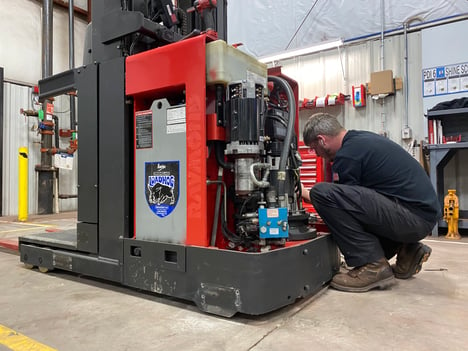
"At Carolina Handling, we guarantee a four-hour response time. However, we're oftentimes on site within the hour. The goal isn't just about fixing the equipment. It's about helping our customers get back to that productive state,” Horak said.
How Do Preventive Maintenance, Service Support, Parts Availability, and Rentals Work Together?
Many organizations view maintenance, service, and rentals as separate functions. In reality, they work together to support equipment uptime.
Preventive maintenance helps reduce the likelihood of unexpected failures. Responsive technicians and available parts help shorten repair times when issues occur. Rental equipment provides a temporary solution when operations need additional capacity or replacement equipment.
Together, these capabilities help support operational continuity while minimizing costly disruptions.
"Confidence comes from knowing that your operation is prepared," Horak said.
- Experienced technicians
- Extensive parts availability
- Rental fleet availability
- Fleet expertise
- Proactive maintenance planning
"That allows operations leaders to focus on what their job is really about, instead of worrying about unexpected equipment failures,” Horak said.
Where Should Operations Leaders Start If They Want to Improve Uptime?
For organizations focused on improving equipment performance, Horak believes the first step is to understand where downtime occurs and why.
Once those causes are identified, businesses can begin implementing preventive maintenance schedules, strengthening operator inspection programs, reviewing fleet utilization, and developing contingency plans for unexpected breakdowns.
Horak encourages organizations that have historically relied on reactive maintenance to start making improvements now.
"It's never too late to start," he said. "A lot of organizations begin with a reactive maintenance policy because immediate demands are always more urgent, but reactive maintenance is more expensive over time."
His recommendation is to begin by understanding your fleet, identifying critical equipment, and creating a maintenance schedule that aligns with your operation.
"Small improvements today can oftentimes prevent massive disruptions tomorrow," Horak said.
Frequently Asked Questions
Does preventive maintenance apply to rental forklifts?
Short answer: Yes. Rental forklifts should be maintained and inspected just as carefully as owned equipment to support a safe operation, reliability, and uptime.
Who pays for preventive maintenance on a rental forklift?
Short answer: When Carolina Handling is the rental provider, preventive maintenance is included in the rental rate.
What does forklift downtime cost a business?
Short answer: A single hour of downtime can cost hundreds to thousands of dollars in lost productivity, depending on the operation. Downtime can also affect customer satisfaction, workflow efficiency, and deliveries.
What causes most forklift breakdowns?
Short answer: Many unexpected failures begin with maintenance items that are not addressed. Preventive maintenance helps identify and correct issues before they become costly repairs.
What should I look for in a forklift rental company?
Short answer: Businesses should evaluate fleet availability, technician coverage, parts availability, service responsiveness, and equipment quality when selecting a rental provider.
When should a company rent a forklift?
Short answer: Rental equipment can be used during equipment repairs, periods of increased demand, project work, or when evaluating potential fleet changes before making a purchase decision.
What are the warning signs that a rental forklift needs repair?
Short answer: Common signs include hydraulic leaks, unusual noises, warning lights, slow performance, battery issues, and steering or brake concerns.
What does a forklift preventive maintenance checklist include?
Short answer: A comprehensive checklist includes brakes, steering, hydraulics, tires, forks, mast components, batteries, fluid levels, lights, alarms, and safety devices.
Why is preventive maintenance (sometimes called preventative maintenance) better than reactive maintenance?
Short answer: Preventive maintenance helps identify issues before equipment fails, reducing unexpected downtime, repair costs, and operational disruptions. According to David Horak, VP of Operations at Carolina Handling, "Preventive maintenance is almost always less costly than reactive maintenance."
What is a forklift uptime strategy?
Short answer: A forklift uptime strategy combines preventive maintenance, operator inspections, service responsiveness, parts availability, fleet planning, and rental support to minimize disruptions and keep operations running efficiently.
Can Carolina Handling support more than one forklift brand?
Short answer: Yes. According to David Horak, VP of Operations at Carolina Handling, many facilities operate mixed-brand fleets. Having a single service provider that can maintain and repair all major brands simplifies fleet management and service coordination.
How quickly can Carolina Handling respond to a forklift service issue?
Short answer: Carolina Handling guarantees a four-hour response time and is often on site within an hour.