



Businesses should start planning seasonal forklift rentals at least 60 to 90 days ahead of peak demand to ensure the right equipment, workflows, and support systems are aligned. Early planning reduces operational risk, prevents bottlenecks, and allows companies to scale efficiently during high-volume periods.
Peak season success isn’t just about adding more equipment, it’s about optimizing your entire operation, from labor to layout to fleet mix.
When Should Businesses Start Planning Their Seasonal Forklift Rentals?
Businesses should begin planning forklift rentals 60 to 90 days in advance to properly prepare for peak demand.
“It’s not just about aligning equipment needs, but it’s thinking about the full operation,” said Ryan Tiller, VP of Distribution and Fleet Services at Carolina Handling.
Tiller said peak demand impacts labor, workflows, and facility layout.
“On the equipment side, standard rentals that operations use can be sourced fairly quickly. But many operations require a specific kind of modification, or non-standard forks, attachments, and cameras. Those things can add some lead time to a rental, and getting ahead of that is always good advice,” Tiller said.
Planning early ensures teams can proactively address all of these factors before demand spikes.
What Are the Risks of Waiting Too Long to Rent a Forklift You Need for Peak Season?
Waiting too long forces businesses into reactive decision-making, which leads to higher costs, more stress, and operational inefficiencies.
“You want to play in an offensive position, not defensive. Leaders need to be thinking about those things ahead of time and giving their teams enough time to prepare,” Tiller said.
Last-minute rentals also increase the risk of settling for equipment that isn’t ideal for your operation, which can slow productivity during the most critical time of year.
What Questions Should Businesses Ask About Their Operations Before Pursuing a Forklift Rental?
Before renting equipment, businesses should assess their entire operation, not just equipment needs.
Key areas to evaluate include:
- Labor availability and productivity
- Facility layout and workflows
- Current bottlenecks or inefficiencies
- Expected increase in demand vs. normal volume
Tiller emphasizes that leaders must identify constraints early.
“For example, look at bottlenecks, look at where there is inefficiency and where things might be getting held up. Because that’s only going to get even more pronounced when you put greater demand on the system,” Tiller said.
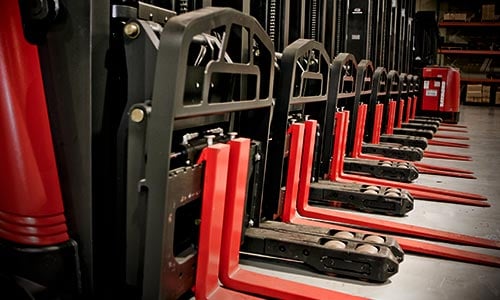
Adding more of the same kind of equipment might meet your peak needs, but understanding the end-to-end flow may reveal opportunities to reduce the amount of equipment you would normally need. For example, many companies use pallet trucks to handle truck unload operations, and then hand off to reach trucks to put away full pallets in a rack. The entire flow could potentially be handled by a stand-up or counterbalance truck, reducing the equipment demand by half.
How do Throughput, Order Volume, and SKU Complexity Impact Seasonal Rental Needs?
Higher throughput and order volume require equipment that can run longer and more efficiently, and that is supported by proper maintenance and service plans. SKU complexity can significantly change equipment requirements.
“Looking at SKU complexity, especially if there are going to be changes in that during peak, that can be tricky because if an operation is running a set of equipment types,
and the complexity is going to require that to be different, that group has got to be very much in front of knowing what the right equipment is for that complexity,” Tiller said.
Tiller adds that increasing SKU complexity may require a different equipment mix.
“All equipment is not the same, of course. And it's easy to fall into a position where operations are using equipment in a sub-optimized way. And throwing more sub-optimized equipment at a growing demand is not going to help,” Tiller said.
How Can Businesses Identify Workflow Bottlenecks Before Peak Season?
The most effective way to identify bottlenecks is to analyze where delays, backups, and idle time occur today.
Common indicators include:
- Staging areas backing up
- Delays in moving product
- Imbalanced equipment usage
- Excessive overtime
“You have to look at where the issue is, though. Is it equipment? Is it labor? Is it a layout workflow issue? Or a combination of all of those?” Tiller said.
He said these issues will only intensify under peak demand, making early identification critical.
What Operational Red Flags Signal Your Fleet Isn’t Ready for Peak Demand?
Several red flags indicate your current fleet may not be sufficient:
- Equipment imbalances (some overused, others idle)
- Increased overtime costs
- Slower turnaround times
- Safety concerns in congested areas
“Those red flags could be indicators that you need to invest in some rentals or change the mix out to accommodate the peak demand,” Tiller said.
Fleet and warehouse optimization systems like our iWAREHOUSE telematics solution can help leaders understand the “why” behind the data to determine optimization strategies in preparation for peak seasons.
How Can Companies Determine If They Need More Equipment or Different Equipment?
Adding more equipment is not always the right solution. Sometimes the issue is that companies are using the wrong equipment.
“If the operation is running really efficiently and has the right mix of equipment, then just adding more equipment is probably all that's needed. But if there are operations that maybe are not as mature, and they're still trying to figure out their processes and their flows, they really need to be stepping back and looking at the mix of equipment and making sure that the application matches the equipment that's being used today, before adding rental equipment. Adding the wrong rental equipment could slow the flows down even more,” Tiller said.
Additionally, rentals give growing organizations a way to scale without diverting capital into long-term assets. By keeping equipment costs on the operating side of the ledger, customers preserve capital for investments that actually grow the business, rather than tying it up in short-term needs.
What Mistakes Do Businesses Make Without Expert Guidance?
The most common mistake is selecting the wrong equipment for the application, which can reduce efficiency and create safety risks.
“Making sure that the operation is ready for the right equipment, and the flows are ready to handle that equipment in a safe fashion is fundamental,” Tiller said.
To prevent mistakes, he said it’s imperative to understand:
- The data and demand volume
- The SKU mix
- The current layout
“There are plenty of companies out there that will say, ‘We’ve got whatever equipment you want, and we can have it to you really fast.’ But I encourage businesses to really find partners that are going to partner with you to solve problems, not just put another piece of equipment in your operation. You might actually need less equipment. Or you might need more of the right equipment. We'll make sure you've got the right solution for your needs. We will ask the right questions around the layouts, the flows, and what the labor needs are. All of those things are key to making sure that that operation is meeting their objectives,” Tiller said.
What Operational Gains Come from Optimizing Your Rental Strategy?
A well-planned rental strategy improves efficiency, flexibility, and financial performance.
“Rentals are a great strategy because it gives you flexibility to scale up and scale down the equipment side of the equation. And you can do that really quickly and only spend what you need, and figure out what that is through help and through the right questions. You will operate efficiently and make a financial impact on the business,” Tiller said.
Additional benefits include:
- Improved throughput and productivity
- Ability to test different equipment and different ways of moving product through an operation
- Reduced capital investment
- Faster response to demand changes
How Should Companies Plan For Unpredictable Peak Demand?
When demand is uncertain, flexibility becomes the most important factor.
“There is some unpredictability that is going to happen, and so thinking about a partner that can work with you and help you also scale up or scale down during those peak cycles and providing additional support quickly is key,” Tiller said.
A responsive rental partner helps businesses adjust quickly without overcommitting resources.
What Level Of Service Should Businesses Expect from a Rental Provider?
Reliability and responsiveness are just as important as the equipment itself.
“Equipment that doesn’t work is just taking up space and causing more problems,” Tiller said.
Businesses should expect:
- Fully inspected, reliable equipment
- Preventative maintenance support
- Rapid response to breakdowns
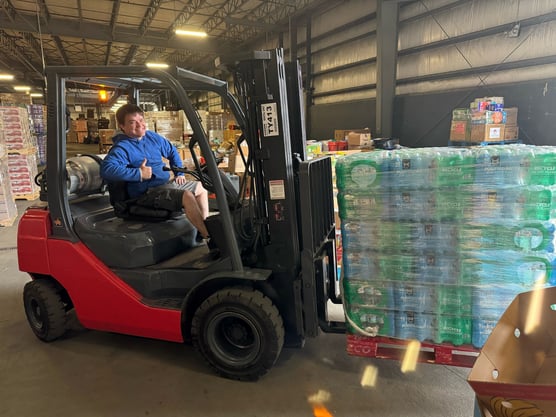
“Lots of money is spent when equipment is not rolling, so we want to minimize that and respond ASAP. Our teams are set up to do that, and we are proud of our average response time of 1.1 hours. When that equipment is in operation and it's in peak demand and it's being run hard, ensuring that you've got a service partner that's there to not only do scheduled service maintenance based on usage, but can respond almost instantly when you need them to respond in a downtime event is critical,” Tiller said.
How Does Early Planning for Forklift Rentals Give Businesses a Competitive Advantage?
Early planning allows businesses to operate proactively rather than reactively.
“If you can control the changes that you know are coming so that you can deal with the changes that you don't know are coming, you're going to just be more successful by and large,” Tiller said.
Early planning also frees teams to focus on core operations.
What Does A Successful Seasonal Forklift Rental Strategy Look Like?
A well-executed plan includes:
- Early assessment of demand and constraints
- Optimization of labor, layout, and workflows
- Selection of the right equipment mix
- Collaboration with a trusted rental partner
“It’s not just the equipment, but it’s the labor and the workflows and layouts. And then working with your partner and provider to review that with you is really key because that can change the equipment needs that a company may need to be looking at,” Tiller said.
What Is the Single Most Important Piece of Advice for Planning for Peak Season?
“Don't wait until the pressure is on. Do it when the pressure is off and you can make decisions ahead of time,” Tiller advises.
Proactive planning allows businesses to make better decisions and avoid costly mistakes.
What Should You Do If You’re Not Sure Whether You Need a Forklift Rental?
Start by analyzing your operational constraints. Tiller said your operation is only as fast as its slowest bottleneck. He recommends identifying those constraints first, then determining whether rental equipment is the right solution.
How Quickly Can You Get a Forklift Rental?
- Standard forklift rentals from Carolina Handling can typically be delivered within about 48 hours.
- Emergency rentals can be deployed even faster, with next-day delivery available. “We do have a stock of what we call emergency rentals that we can deploy next day on site,” Tiller said.
- Carolina Handling can source equipment quickly if it is not already in the fleet, ensuring customers still get what they need without delays.
- Specialized rentals that require modifications, such as specific forks, safety lights, or custom features may require more time.
“But the goal is speed. If it's a planned rental, there's time to make sure everything is dialed in. But we also know that there are unplanned needs and we want to be able to respond to customers' needs fast and get them that rental,” Tiller said.
Are There Geographic Limitations for Forklift Rentals?
No, Carolina Handling supports rentals across its five-state territory, which includes North Carolina, South Carolina, Georgia, Alabama, and Florida’s Central Time Zone.
Summary: How to Prepare for Seasonal Forklift Rental Success
Successful peak season operations require early planning, the right equipment mix, and a clear understanding of operational constraints.
- Start planning 60–90 days in advance
- Identify bottlenecks and workflow inefficiencies
- Focus on the right equipment, not just more equipment
- Partner with a provider that offers flexibility and support
- Plan proactively to stay ahead of demand
A strategic approach to seasonal forklift rentals helps businesses improve efficiency, reduce risk, and stay competitive during peak demand.
Frequently Asked Questions
When should I reserve a seasonal forklift rental?
Short answer: Businesses should begin planning 60–90 days ahead of peak season to ensure the right equipment and support are in place.
What are the biggest risks of waiting too long?
Short answer: Waiting leads to reactive decision-making, increased costs, and reduced efficiency.
How do I know if I need more forklifts or different ones?
Short answer: Assess whether your current equipment matches your operational needs. Adding the wrong equipment can slow productivity.
How fast can I get a rental forklift?
Short answer: Standard rentals from Carolina Handling are typically available for delivery within 48 hours, with emergency options available the next day.
What should I look for in a rental partner?
Short answer: Reliable equipment, preventative maintenance, and fast service response are critical.