



Warehouse automation is transforming supply chain operations across the United States as businesses look for ways to improve efficiency, increase throughput, support long-term growth, and address ongoing labor shortages. However, implementing automation successfully requires careful planning. Many companies face warehouse automation challenges related to implementation costs, integration with legacy systems, workforce adoption, maintenance, scalability, and data security. Without the right strategy and support, even promising automation projects can struggle to deliver long-term results.
At Carolina Handling, automation projects begin with understanding the customer’s operation as a whole. Rather than focusing on a single piece of equipment or isolated issue, our experts work to identify operational bottlenecks, evaluate future growth plans, and implement solutions that align with the customer’s long-term business goals.
What is Warehouse Automation?
Warehouse automation refers to the use of technology, robotics, software, and automated equipment to improve warehouse operations such as storage, transportation, picking, and order fulfillment.
Automation can range from simple repetitive transport routes handled by autonomous vehicles to more advanced integrated systems involving automated storage and retrieval systems (AS/RS), conveyors, sorters, and warehouse software platforms.
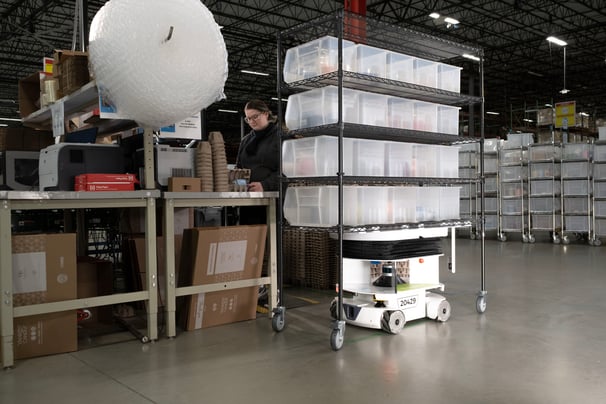
It’s important to note that automation is not simply about adding technology. According to Carolina Handling Sales Manager Brayden Cooper, businesses must first understand and optimize their existing processes before implementing automation.
“We always say optimize before you automate,” Cooper said.
That philosophy helps organizations avoid one of the most common challenges in warehouse automation: automating inefficient processes.
“From our end, we can go in and take a process that's currently in place at a facility, and we can automate it. But if we automate a bad process, it's going to create a downstream effect,” Cooper said.
Cooper said successful warehouse automation projects require companies to evaluate workflows, identify bottlenecks, and ensure processes are streamlined and repeatable before implementing automation technologies.
What Are the Most Common Warehouse Automation Challenges?
Every warehouse operation is different, and there is no one-size-fits-all approach to automation. Businesses often encounter challenges related to budgeting, integration, operational disruptions, employee adoption, maintenance, and scalability.
Nick Romyns, Intralogistics Solutions Manager at Carolina Handling, said one of the biggest challenges of warehouse automation is organizational adoption.
“Customer buy-in at both the operational level and the leadership level is extremely important. If there's disconnect between either of those teams, there is a high probability that an automated solution may not be successful. You've got operators bought in, but the leadership level isn't continuing to empower or drive things to make it successful long term, or vice versa,” Romyns said.
When leadership teams and operational teams are not aligned, Romyns said automation systems may fail to deliver the expected results.
“What could be a successful automation project maybe isn't as impactful as they were hoping, because they're not pushing it together,” Romyns said.
Another major challenge involves determining whether automation is the right fit for a facility’s products and workflows. Automation systems typically perform best in environments with repeatable movements and consistent SKU profiles.
“Automation likes consistency. Repeatable movements, or paths, more consistent SKUs in terms of shapes, sizes, weights, where you're able to automate more with consistency,” Romyns explained.
Facilities handling oversized products, highly irregular SKUs, or constantly changing workflows may require a more customized automation strategy.
How Much Does Warehouse Automation Cost?
Cost is one of the most common warehouse automation challenges that businesses face.
Many organizations assume automation is only feasible for large enterprises with significant budgets. Cooper said that misconception often prevents companies from exploring automation opportunities that may fit their operations and financial goals.
“They may think Fortune 500 companies are the only ones with budgets that can approve some system or automation aspect of their business. But when companies understand there are different aspects and different tiers of automation that can help them improve their operation and efficiency, and that we can bring to the table either a phase one, phase two, or phase three approach, I think we can open the conversation to a bigger idea,” Cooper said.
Cooper said businesses should also evaluate the cost of delaying automation improvements and ask, “What is automation going to cost you if you don't improve?”
Labor shortages, operational inefficiencies, and throughput limitations can all impact long-term profitability and competitiveness.
Return on investment varies based on the operation and application, but Cooper notes that many businesses target a reasonable ROI timeline.
“I would say an 18-month ROI out there in the industry seems to be a sweet spot. That’s a rough number,” Cooper said.
Rather than focusing solely on upfront investment costs, businesses should evaluate how automation supports efficiency, scalability, and long-term operational growth.
How Do You Integrate Automation with Legacy Systems?
Challenges of automating legacy warehouses can be common in brownfield facilities that are already operational.
Unlike greenfield facilities, where systems can be designed from scratch, brownfield operations require automation to be integrated into active environments without disrupting throughput.
“For a brownfield operation, you don't want to slow the customer's throughput and their operation currently, but at the same time, we have to implement whatever the solution may be to automate if we’re at that point. And we have to be able to make sure those schedules and implementation processes are going be justified to ask that customer to stop whatever they're doing so that this process can be improved,” Cooper said.
Legacy warehouse management systems (WMS), warehouse control systems (WCS), and enterprise resource planning (ERP) platforms can also create integration challenges.
“One personal example was a time when we found and identified an opportunity to automate a process, but their systems internally, their WS and ERP system would not integrate appropriately. So that customer had to go back to the drawing board,” Cooper said.
In some cases, organizations may need to modernize software infrastructure before automation can move forward successfully.
Romyns explains that communication protocols and infrastructure planning are critical parts of implementation, and said the customer’s IT team must be involved in the process.
Addressing integration requirements early can help businesses reduce delays, avoid compatibility issues, and improve implementation outcomes.
Does Warehouse Automation Replace Workers?
Labor concerns are another major topic surrounding warehouse automation.
Employees may fear job loss, while leadership teams may struggle to communicate how automation supports operational growth and workforce development.
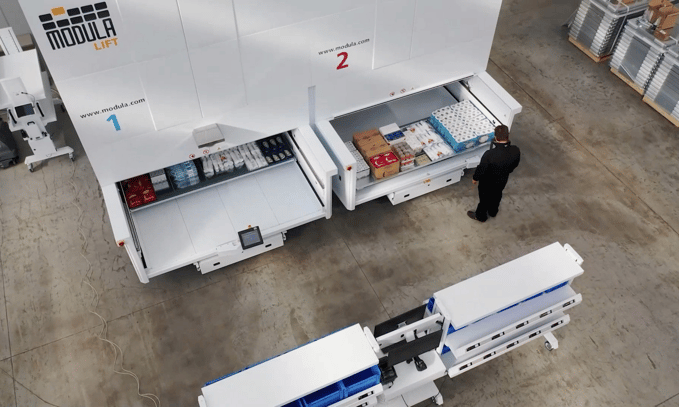
“I think the labor conversation is very unique. You never want to eliminate the job or the person, but at the same time, the way these businesses are growing and with the labor shortages out there, what those customers have identified is that there's probably a better resource or opportunity for that person to be in the operation in a different role, versus what they're currently doing that can be automated,” Cooper said.
By automating repetitive or time-consuming processes, businesses can remove operational bottlenecks while allowing employees to focus on higher-value work that supports long-term growth. Cooper said in many cases, this shift not only helps the company scale more efficiently but also creates new paths for employees to grow and advance within the organization.
Cooper said when companies step back and look at the bigger picture, automation becomes less about replacing labor and more about repurposing talent into more technically advanced roles.
“What may have been an entry-level job at one point might be a more advanced job and technical skill,” Cooper explains.
How Do You Maintain and Support Automated Systems?
Maintenance planning is another key challenge in warehouse automation.
Automated systems include moving components, software integrations, controls, and communication networks that require preventative maintenance and ongoing support.
Historically, Cooper said some automation providers struggled to provide fast service support when issues occurred. Long response times and delayed repairs can lead to costly downtime.
“That was a major gap. Carolina Handling saw that opportunity and we realized our technicians can get on the ground very quickly,” Cooper said.
Cooper says Carolina Handling focuses heavily on long-term serviceability and customer support after implementation.
“We don't leave that customer hanging. Similar to what we've done with the forklifts and service for 60 years at this point is that four-hour guarantee, that four-hour response time. It's the same for a forklift as it is for an automation solution,” Cooper said.
Cooper said Carolina Handling is committed to servicing any systems our team has worked on. Cooper explains that the Sales, Service, and Parts teams coordinate to obtain the necessary certifications, prepare parts support, and ensure technicians are properly trained so customers continue to receive support after installation.
Safety training also plays an important role in maintaining reliable operations. Romyns said employees must understand how to safely work around automated systems and robotics, and points to the importance of ANSI/ITSDF B56.5 standards, which define how to effectively work with autonomous vehicles within a facility.
“Without the right training, exposure and expectations being set around what the automation is, how it works and how to work with it or around it, there then could be inherent safety risks,” Romyns said.
Preventative maintenance programs, technician support, and employee training all contribute to long-term automation reliability.
What Are the Data Security Risks of Warehouse Automation?
As warehouses become increasingly connected through automation technologies, cybersecurity and data security concerns continue to grow.
Automation systems often communicate with warehouse software, ERP platforms, cloud-based systems, and internal networks. Without proper planning, connected systems can create vulnerabilities.
“When we're implementing any sort of automated solution that's going to have to communicate externally to a customer's Wi-Fi network or some sort of ERP or WMS software, the customer’s IT team will ask, ‘How does your system communicate with ours? What do those communication protocols look like? And what do we need to do to be able to communicate, but also make it safe? What ports do we have to open to be able to communicate?'" Romyns said.
That’s why it’s important to plan as effectively as possible before implementation to ensure communication remains secure and no vulnerabilities are left open for misuse.
What Strategies Help Overcome Automation Challenges?
Successfully overcoming warehouse automation challenges requires more than selecting the right technology. Businesses need a long-term strategy that includes planning, communication, training, phased implementation, and ongoing support.
At Carolina Handling, the process begins with understanding the customer’s operation and identifying the true operational challenges before recommending solutions.
“We want customers to understand that we're there to help them,” Cooper said.
How Do You Plan and Budget for Warehouse Automation?
Comprehensive planning is one of the most effective ways to overcome challenges in implementing warehouse automation.
Carolina Handling evaluates operational bottlenecks, throughput requirements, forecasting, labor challenges, workflows, and future growth expectations before recommending a solution.
“There’s a lot of different things we need to understand on the front end,” Cooper said.
A strong business case should include:
- Current operational challenges
- Throughput goals
- Labor considerations
- Future growth plans
- ROI expectations
- Costs associated with delaying improvements
Businesses should also evaluate the operation as a complete ecosystem rather than focusing on a single isolated issue.
“There can be a hyper-focus on what the customer thinks they need, versus zooming out and trying to see the operation as a whole. Carolina Handling associates have a partner-consultant mindset to understand the business,” Cooper said.
This broader perspective helps prevent downstream bottlenecks and implementation failures.
How Do Training Programs Support Automation Adoption?
Training and organizational alignment are critical for successful automation adoption.
Employees need to understand how automation will improve workflows and how they will safely interact with the technology.
Automation also creates opportunities for employees to develop new technical skills and advance into more specialized roles.
By investing in workforce development, businesses can improve adoption while preparing teams for the future of warehouse operations.
What Is the Best Way to Integrate Automation Gradually?
Gradual integration strategies help businesses reduce operational disruptions during implementation, especially in brownfield facilities.
Carolina Handling works with customers to coordinate implementation schedules and minimize operational impact during installation.
“We truly try to make sure we slow down the process to do it right the first time. It is a case-by-case system,” Cooper said.
Phased implementation also allows businesses to scale automation over time while supporting future operational growth.
“We want to get ahead of the curve, not just stay with the current growth trends,” Cooper said.
Why Is Ongoing Maintenance and Upgrading Important?
Long-term automation success requires ongoing maintenance and support.
Carolina Handling prioritizes serviceability by ensuring technicians, parts support, and certifications are available to support customers after implementation.
Businesses should also continue evaluating software communication, cybersecurity protections, and infrastructure updates as systems evolve.
“There's always a need to look at how we can plan as best as possible before something's implemented to make the communication safe and not leave the back door open for anything bad,” Romyns said.
Conclusion: Embracing Automation for Future Success
With the right strategy, planning, and partnership, warehouse automation challenges can be successfully managed.
From implementation costs and integration conversations to workforce adoption and maintenance, every automation project requires a thoughtful and customized approach.
At Carolina Handling, the process starts with understanding the customer’s operation, identifying bottlenecks, evaluating long-term goals, and implementing the right solutions for the business.
“It's always problem-solving. There are some applications that may be alike, but they're never apples-to-apples. There are always different ways that customers prefer to drive their process, or how they have things flow through their facility, or what their SKUs look like, what their materials look like, what their vendors or partners or customers require them to do that may be different from somebody else. So there are always different factors that come into play that you have to evaluate and then kind of work with and understand the best solution now given these constraints, given these requirements, and how do we problem solve for that?” Romyns said.
By approaching automation as a long-term partnership rather than a one-time technology purchase, businesses can create scalable, efficient, and future-ready warehouse operations.