



Conveyor systems rarely fail without warning. Long before a breakdown occurs, warning signs such as bearing wear, misalignment, overheating components, and material flow disruptions often develop beneath the surface. Unfortunately, many of these issues go undetected during traditional visual inspections, leading to costly downtime, emergency repairs, and lost productivity.
As warehouses and distribution centers continue to place a great emphasis on uptime and reliability, organizations are increasingly looking for help identifying problems before they become failures.
Unlike traditional inspections, the Mobile Conveyor Inspection System (MCIS) from TinMan Systems rides directly on the conveyor system while operations continue, collecting real-time diagnostic data through video, thermal imaging, audio monitoring, and vibration analysis. The partnership between Carolina Handling and TinMan Systems demonstrates how combining innovative diagnostic technology with experienced service expertise helps customers turn data into action.
Spencer Hirsch, Senior Business Development Manager at TinMan Systems, describes the partnership as “Modern conveyor health monitoring delivered by Carolina Handling, strengthened by the actionable intelligence produced by TinMan Systems’ MCIS platform."
Why Does Conveyor Health Monitoring Matter?
Facilities depend on conveyor systems to move products quickly and efficiently. Even a single unexpected failure can create bottlenecks, disrupt order fulfillment, and increase operational costs.
Traditional maintenance approaches often rely on either scheduled inspections or reactive repairs after a failure occurs, and neither approach provides continuous visibility into the actual condition of a conveyor system while it's operating.
The MCIS changes that by collecting diagnostic information during normal operations, allowing maintenance teams to identify potential failures before they impact production.
“When I first came across the MCIS, it was like, ‘Where has this been?’ It's a tool that is going to make life easier and help us identify things we can't see with the naked eye. So to have that tool in place to be more successful, and you tell me all I have to do is put it on a conveyor system? Sign me up,” said Brandon Hardy, Service Manager at Carolina Handling.
This shift toward predictive maintenance is helping organizations reduce downtime, improve reliability, and make more informed maintenance decisions.
What Makes the Carolina Handling and TinMan Systems Partnership Unique?
Strong partnerships are built on complementary expertise.
While TinMan Systems provides the advanced diagnostic technology, Carolina Handling delivers the service, interpretation, and operational expertise needed to transform diagnostic data into actionable maintenance strategies.
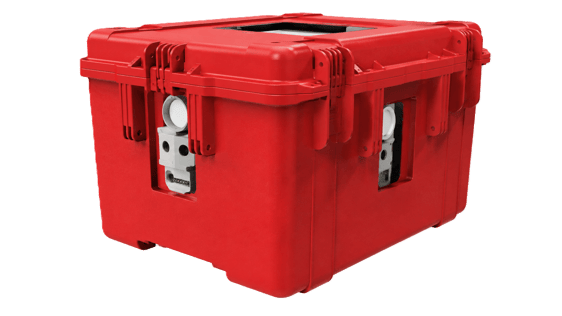
“We constantly look for ways to further separate ourselves from our competition. We try to lead the pack when it comes to innovation, and historically, we have done that. Most other competitors, they follow in our footsteps, they don't pioneer new partnerships or new programs. We invent those, we create those,” said Tanner Burford, Regional Service Manager at Carolina Handling.
"A strong partnership is built on complementary strengths and a shared focus on customer outcomes. Carolina Handling has shown genuine commitment to understanding how the MCIS works and how its insights can support the facilities they serve. That level of engagement is exactly what helps customers get the most value from the technology,” Hirsch said.
The result is a solution that extends beyond technology implementation and focuses on improving conveyor system performance and customers’ operations.
Turning Conveyor Data Into Actionable Maintenance Decisions
Collecting data is only one part of predictive maintenance. Interpreting that data correctly is what drives meaningful results.
“We essentially take the guesswork out of it,” Burford said.
Carolina Handling provides the expertise necessary to translate raw inspection data into practical maintenance recommendations.
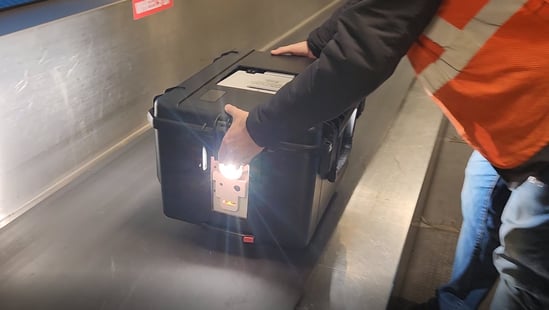
“We have our own MCIS units. We go do the legwork. We provide the service,” Hardy said.
“We take the data, we go back, we interpret it, and we go to the customer and say, ‘Hey, there's a high probability that you're going to have a failure on X component in the very near future. Would you like to go ahead and schedule that replacement rather than wait on it to break and cost you downtime?’” Burford said.
This ability to connect diagnostics directly to maintenance planning helps organizations reduce unexpected failures and improve operational continuity.
How Does the MCIS Help Reduce Conveyor Downtime?
The Mobile Conveyor Inspection System helps identify issues that are often difficult or impossible to detect during traditional inspections, including:
- Bearing failures
- Excessive heat in motors and conveyor components
- Conveyor misalignment
- Transfer and merge point issues
- Material flow disruptions
- Hidden wear throughout the conveyor system
By identifying these conditions early, facilities can schedule repairs during planned maintenance windows, rather than being forced to react to unexpected breakdowns.

"This shifts that mindset and it allows you to project things that really do need to be replaced before they fail. A conveyor is unlike a forklift where we can say, ‘These units need to be maintained or replaced about every X amount of hours because they run an increased risk of failing after that.’ A conveyor is not the same way. So this adds an additional layer to their business where they're able to project these failures and decrease their downtime,” Burford said.
Why Does Service Expertise Matter in Conveyor Diagnostics?
Even the most advanced diagnostic technology requires operational context.
Every conveyor system has unique layouts, loading conditions, operating schedules, and maintenance histories. Understanding how those factors influence system performance is essential for making informed maintenance decisions.
"Conveyor systems vary widely, and real-world performance depends on far more than what any single tool can show. A service partner who understands how conveyors age, wear, and behave under load can put MCIS insights into the right operational context. Carolina Handling brings that practical understanding, helping customers turn diagnostic data into informed maintenance decisions,” Hirsch said.
This combination of technology and experience enables organizations to prioritize maintenance activities based on actual operational risk.
"It helps customers move toward a more proactive maintenance approach. The MCIS provides continuous, evidence based visibility into system health, and Carolina Handling can help customers act on those insights within their existing service programs. Over time, that combination supports better planning, fewer surprises, and more consistent system performance,” Hirsch said.
Why Are Strategic Partnerships Important in Modern Material Handling?
The material handling industry is rapidly moving toward predictive maintenance, automation, and data-driven decision-making.
Hirsch said the Carolina Handling and TinMan Systems partnership reflects that evolution.
"It reflects a broader shift in the industry toward predictive, data-driven maintenance supported by strong service execution. Combining advanced diagnostics like the MCIS with experienced service providers helps customers adopt these technologies more effectively. Carolina Handling’s early engagement shows how integrators and service organizations can play a meaningful role in that transition,” Hirsch said.
Supporting Carolina Handling's Mission as a Total Solutions Provider
The MCIS service offering aligns closely with Carolina Handling's broader commitment to supporting customers across every aspect of warehouse operations.
“We really do strive to be that one-stop shop where we're able to tackle anything that comes our way within the four walls of the warehouse,” Burford said.
By combining innovative technology, service expertise, and long-term customer support, Carolina Handling helps customers leverage data-driven insights to improve performance, reduce risk, and stay ahead of potential challenges.
Frequently Asked Questions
What is the Mobile Conveyor Inspection System (MCIS)?
Short answer: The Mobile Conveyor Inspection System (MCIS) is a conveyor diagnostic tool that rides directly on conveyor systems during operation, capturing video, thermal imaging, audio, and vibration data to identify potential maintenance issues before they lead to failure.
How does MCIS support predictive maintenance?
Short answer: MCIS identifies early warning signs such as overheating bearings, component wear, and conveyor misalignment, allowing maintenance teams to schedule repairs before equipment fails.
How is partnering with Carolina Handling different from purchasing the technology directly?
Short answer: Carolina Handling provides a complete inspection service, including operation of the MCIS, data analysis, interpretation of findings, and maintenance recommendations. Customers receive actionable insights without needing to manage the diagnostic process themselves.
How often should conveyor systems be inspected?
Short answer: Inspection frequency varies based on system complexity, operating hours, and maintenance requirements. For most operations, a weekly cadence is recommended.
Can MCIS inspections be performed while conveyors are running?
Short answer: Yes. The MCIS is designed to operate during normal production, allowing facilities to gather diagnostic information without interrupting operations.
Why are strategic partnerships important for predictive maintenance technology?
Short answer: Technology is most effective when paired with operational expertise. Strategic partnerships help organizations adopt innovative diagnostic tools more successfully and ensure the resulting data leads to meaningful maintenance actions.
The Bottom Line
Advanced conveyor diagnostics can identify problems before they become failures, but technology alone doesn't improve uptime. Success comes from combining diagnostic intelligence with experienced service professionals who understand how to apply those insights in real-world operations. By pairing the Mobile Conveyor Inspection System with Carolina Handling's service expertise, customers gain a proactive strategy for reducing downtime, improving reliability, and maximizing conveyor performance. Connect with our team to learn how the MCIS can support your operation.