
-

Pareto Storage Calculator
Information | CalculatorsAnalyze SKU velocity, pallet demand, and storage depth using the 80/20 rule. Identify fast-moving inventory and optimize warehouse layout for improved space utilization and efficiency.

How Pareto Analysis Improves Warehouse Storage Efficiency
The Pareto principle, often called the 80/20 rule, helps warehouse operators identify which SKUs drive the majority of activity based on SKU velocity. This Pareto storage calculator analyzes your inventory distribution, pallet counts, and demand patterns to recommend optimal SKU grouping, storage depth and warehouse slotting strategies that improve space utilization and reduce handling time.
Used by Carolina Handling consultants to support real-world studies. Enter your operational data to see how your inventory distributes across fast and slow moving SKUs and identify the most efficient storage strategy.
Pareto Storage Calculator
Estimate SKU velocity groups, pallet demand, utilization, and storage depth recommendations.
The Pareto Principle - 80/20 Rule of SKUs
Warehousing is comprised of two activities: handling and storage.
80/20 Rule
- 20% of inventory constitutes fast movers = majority of handling costs
- 80% of inventory is stored the longest = majority of storage costs
- 20% of SKUs = 80% of Volume
Typical Breakdown of 20%
- 10% of SKUs = 50% of Volume
- 10% of SKUs = 30% of Volume
- 80% of SKUs = 20% of Volume
Typical Breakdown of 80%
- 30% of SKUs = 15% of Volume
- 50% of SKUs = 5% of Volume
Pareto Calculator
Enter your information in the Input section below to calculate the ideal pallet organization for your business.
Who Should Use This Pareto Storage Calculator
This calculator is designed for:
- Warehouse managers optimizing layout and storage
- Operations teams improving SKU slotting and efficiency
- Distribution centers managing high SKU volume
- Businesses scaling inventory and storage capacity
How to Interpret Your Pareto Storage Results
The results above group your SKUs based on velocity and demand using the Pareto principle. Fast-moving SKUs should be stored in easily accessible locations with lower storage depth, while slower-moving inventory can be stored deeper to maximize space utilization. Adjusting your warehouse layout based on these insights can reduce travel time, improve picking efficiency, and increase overall storage density.
Most of Your Warehouse Activity Comes From a Small Set of SKUs
Based on the Pareto principle, a small percentage of SKUs typically drives the majority of movement in your operation.
Store for Speed
Top 10% of SKUs
Place in forward pick locations to minimize travel time.
Store for Balance
Next 10%
Use moderate storage depth to balance efficiency and space.
Store for Density
Bottom 80%
Move to deep or reserve storage to maximize space utilization.
Take the Next Steps: Review Your Insights With an Expert
Frequently Asked Questions About Pareto Warehouse Storage
You May Also Like
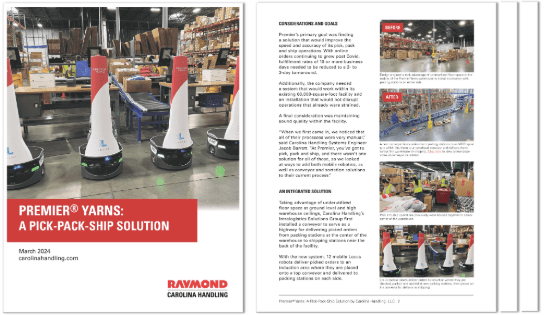
Learn how Carolina Handling helped Premier Yarns double daily picks and significantly improve fulfillment times.
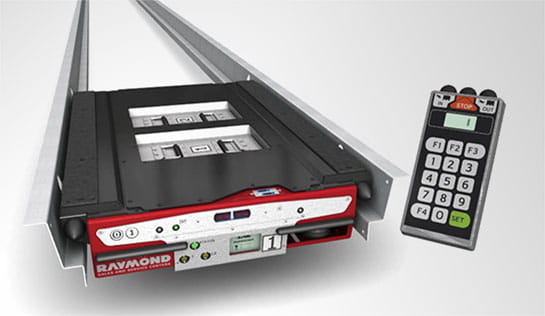
Radioshuttle
Whitepaper: Use Data To Optimize Operations, Improve Safety and Prevent Supply Chain Disruptions